Fire & Smoke
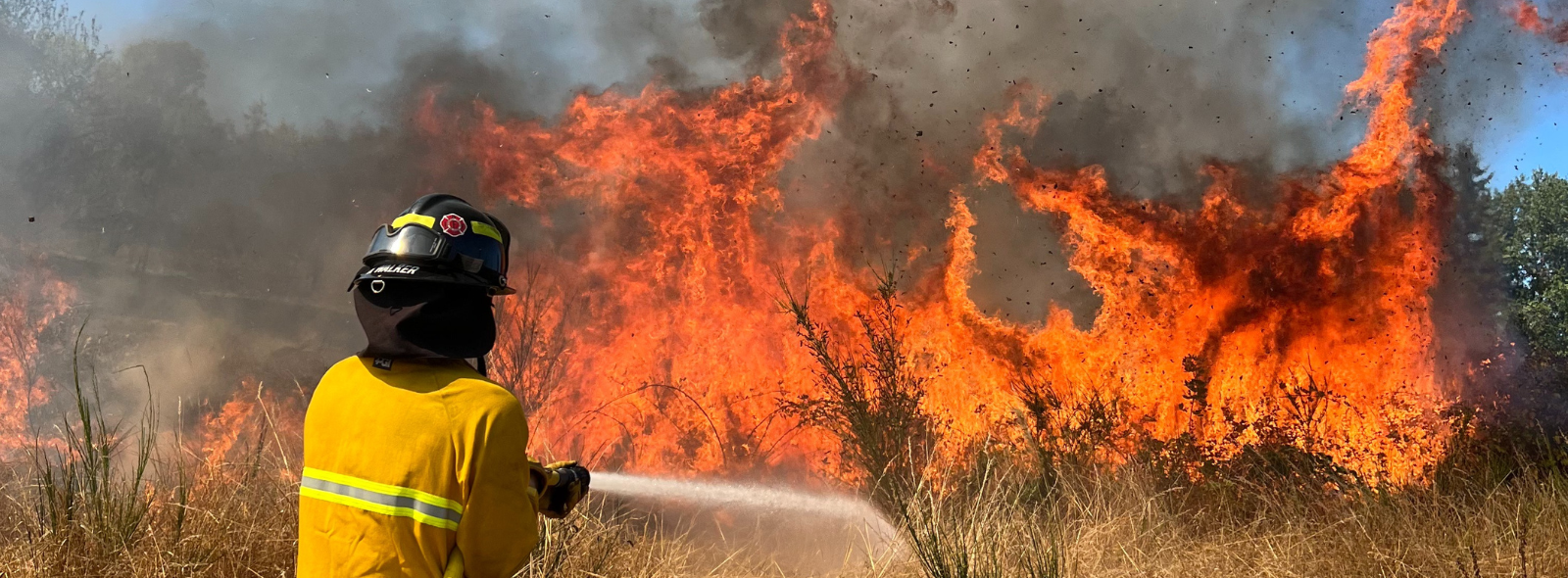
Wildfires are when a fire is burning in natural or wildland areas such as forests, shrub lands, grasslands, or prairies. Surrounding areas will see an increase in air pollution following a wildfire. Regional air quality will be adversely affected.
Wildfire smoke can be harmful to your health and it is important to protect yourself. The biggest risk to your health will come from the fine particles. These particles can get into your eyes and respiratory system and cause health problems such as burning eyes, runny nose, and illnesses like bronchitis. When there is a hazard of wildfires, and the Air Quality Index (AQI) reaches levels considered “unhealthy for sensitive groups”, sensitive groups like children, older adults, pregnant women, and people with heart or respiratory problems should avoid outdoor activities.
Healthy people can also be affected by exposure to the smoky conditions. Caution should be taken when the AQI begins to reach “unhealthy” levels. Remember to watch out for your pets as well! They should be brought indoors when the air quality begins to reach unhealthy levels.
How to protect yourself and your family from outdoor smoke:
-
Monitor the situation
If it looks and smells smoky outside, keep sensitive groups indoors, and limit outdoor activities if possible. Look out for local air quality reports to stay up to date on smoke-related news and health warnings.
-
Keep indoor air as clean as possible
When smoke levels are high, avoid things that burn like wood fireplaces, gas stoves, and even candles. Do not vacuum, as this can stir up particles in your home.
-
Follow doctor's orders
If you have asthma or lung disease, follow your doctor’s directions about taking medicine and following your health management plan. Contact your provider if your symptoms worsen.
People with underlying conditions should consult with their provider about whether or not they should leave the area. If smoke is heavy for an extended period of time, microscopic size particles can build up indoors.
-
Watch out for pets
Keep your pets indoors as much as possible because the smoke is harmful to them too. Monitor air quality, and keep bathroom breaks for your pets brief if there is an air quality alert out.
What to know if you need to evacuate
The risk of wildfires has spread to the west side of the Cascades, an area that historically has not seen widespread wildfires. Once a rare occurrence, wildfires have now become an annual threat, requiring public outreach and preparation. The “Ready, Set, Go!” evacuation campaign informs the public on how to respond to the three levels of evacuations (traditionally Levels 1, 2, and 3), and prepares them on the actions they should take at each level when alerted by authorities.
This evacuation program is also intended for an all-hazards evacuation approach with an initial emphasis on wildfires.
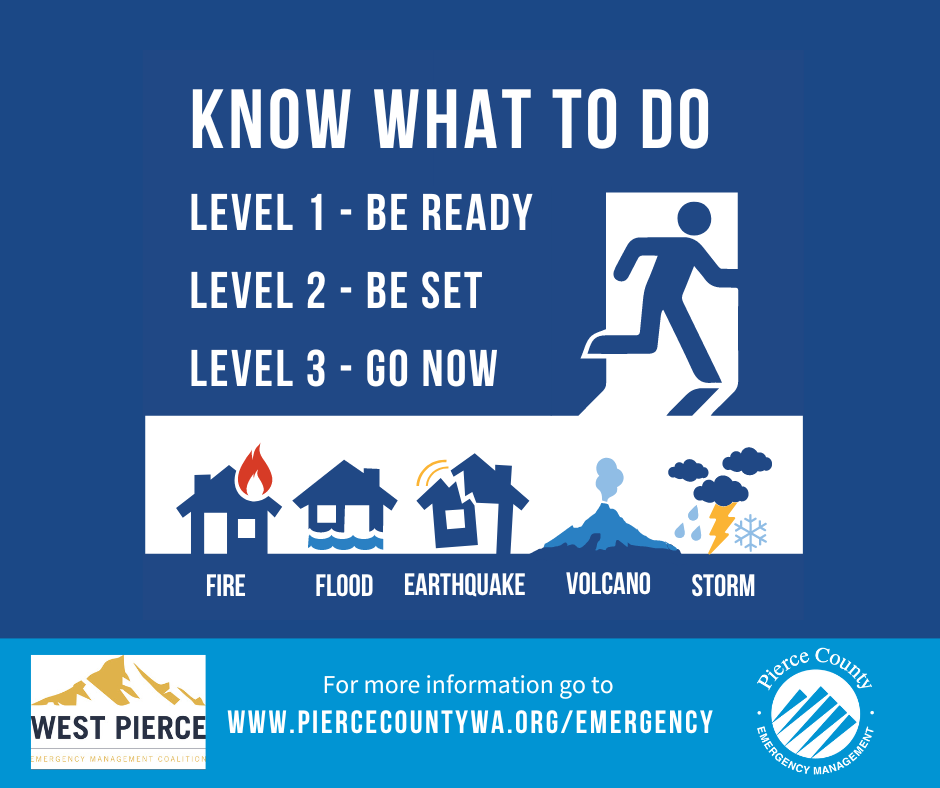
Evacuation levels
-
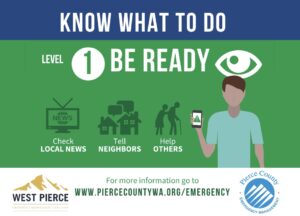
Level 1: "Ready" Phase
Be aware of the danger in your area and start preparing for possible evacuation (Level 1)
Monitor local media and check on neighbors. If you do not already have an evacuation plan or a Go! kit, assemble these now. Conditions can change suddenly, and you may not receive a Level 2 “Be Set” warning before you are ordered to Level 3 “Go! .” Prepare both the inside and outside of your home for fire. Leave if you feel unsafe — do not wait for an official evacuation order.
-
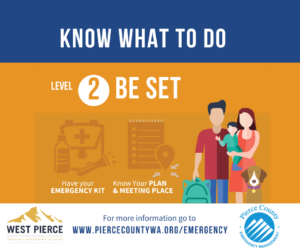
Level 2: "Set" Phase:
Short notice evacuation likely in your area (Level 2)
Be prepared for sudden evacuation. People who need help or more time to evacuate — people with disabilities, people with small children, people with medical conditions and people with large animals — should evacuate now. Ensure your evacuation plan checklist is complete and that your Go! kit is in your vehicle. Stay informed and be aware of emergency alerts from law enforcement or West Pierce Fire & Rescue. Always remember to leave if you feel unsafe, do not wait for an official evacuation order.
-
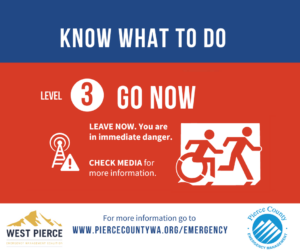
Level 3: "Go" Phase:
Evacuate immediately from your area (Level 3) – Go now!
Danger in your area is current or imminent. Follow directions from law enforcement or West Pierce Fire & Rescue and do not return home until officials have determined it is safe. Notification that it is safe to return home will be given as soon as possible.
Red Flag Warnings
Red flag warnings are issued by the National Weather Service (NWS) when low humidity, warm temperatures, and strong winds could combine to produce extreme fire behavior that is either occurring or will occur within 24 hours.
What to do during a Red Flag Warning:
- Follow the instructions provided by local fire departments and be prepared to take action if a fire develops in your area
- Monitor if burn bans are activated in your area
- Extinguish outdoor fires properly, and never leave them unattended.
- Do not throw cigarettes or matches out of a vehicle. They can ignite vegetation on the side of the road and start a wildfire
- Do not pull your vehicle over in dry grass
- Do not let trailer chains drag on the ground
- Report unattended outdoor fires to 911
- Electric shorts, outdoor tools, ATV/dirt bikes, lawn mowers, and fireworks can also spark a fire